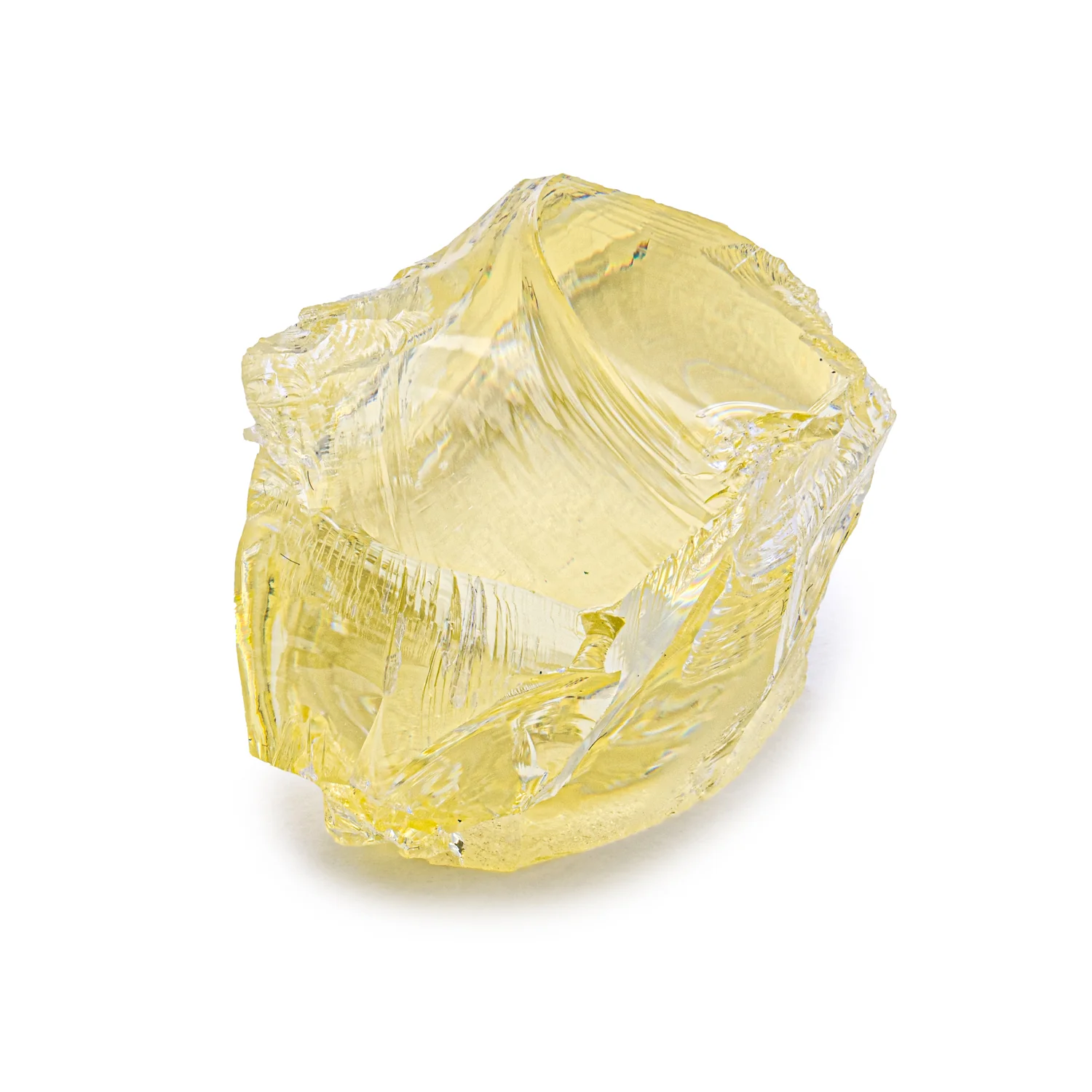
Manhattan Project Shield Window Fragment
The Manhattan Project was the codename for the research and development effort which allowed the United States to rapidly develop a series of atomic breakthroughs during World War II, including the first industrial-scale plutonium production reactor and the first atomic bombs. This enormous project involved over one hundred thousand scientists, engineers, technicians, and construction workers at more than 30 sites across the United States, including well-known locations such as Oak Ridge, Los Alamos, Trinity, and Hanford.
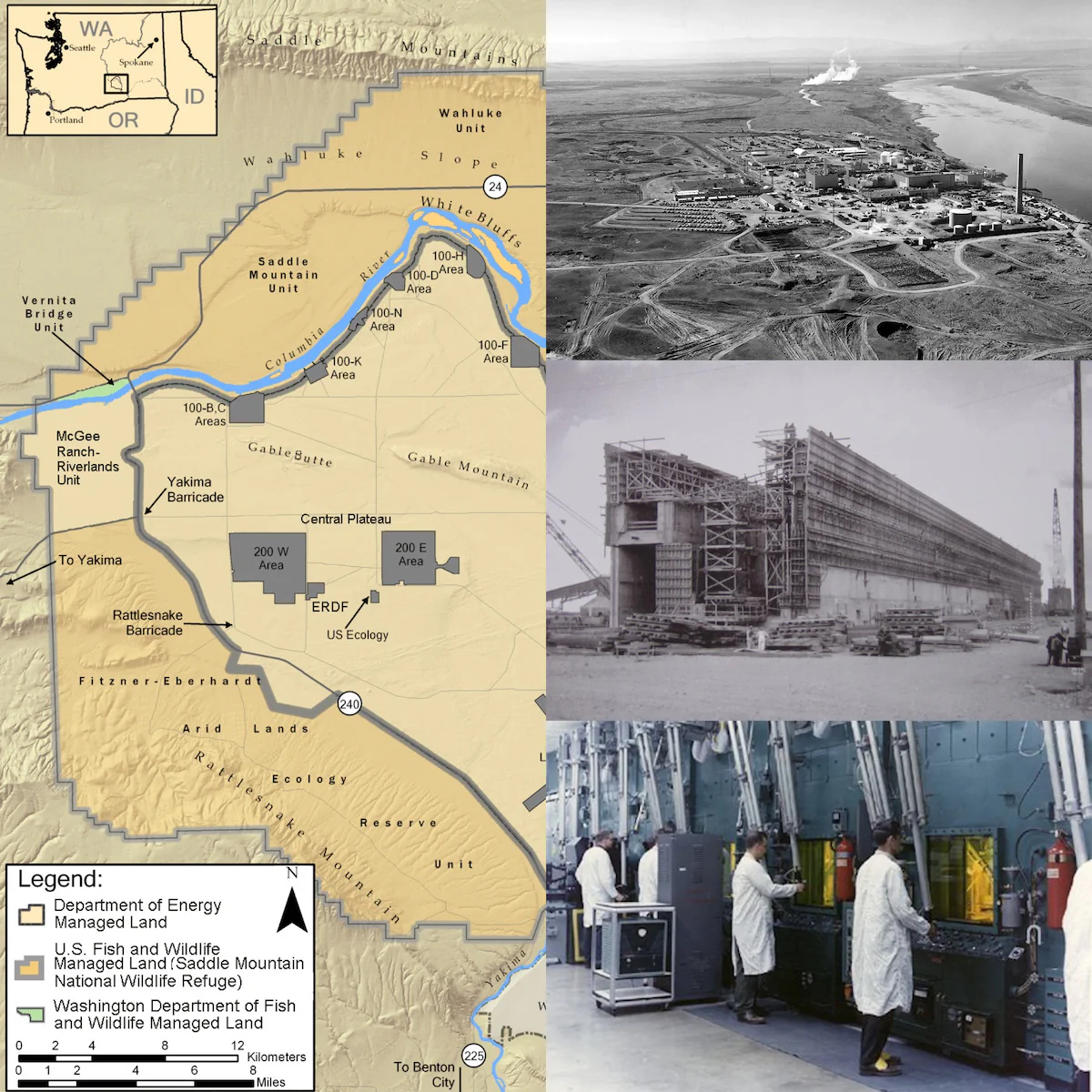
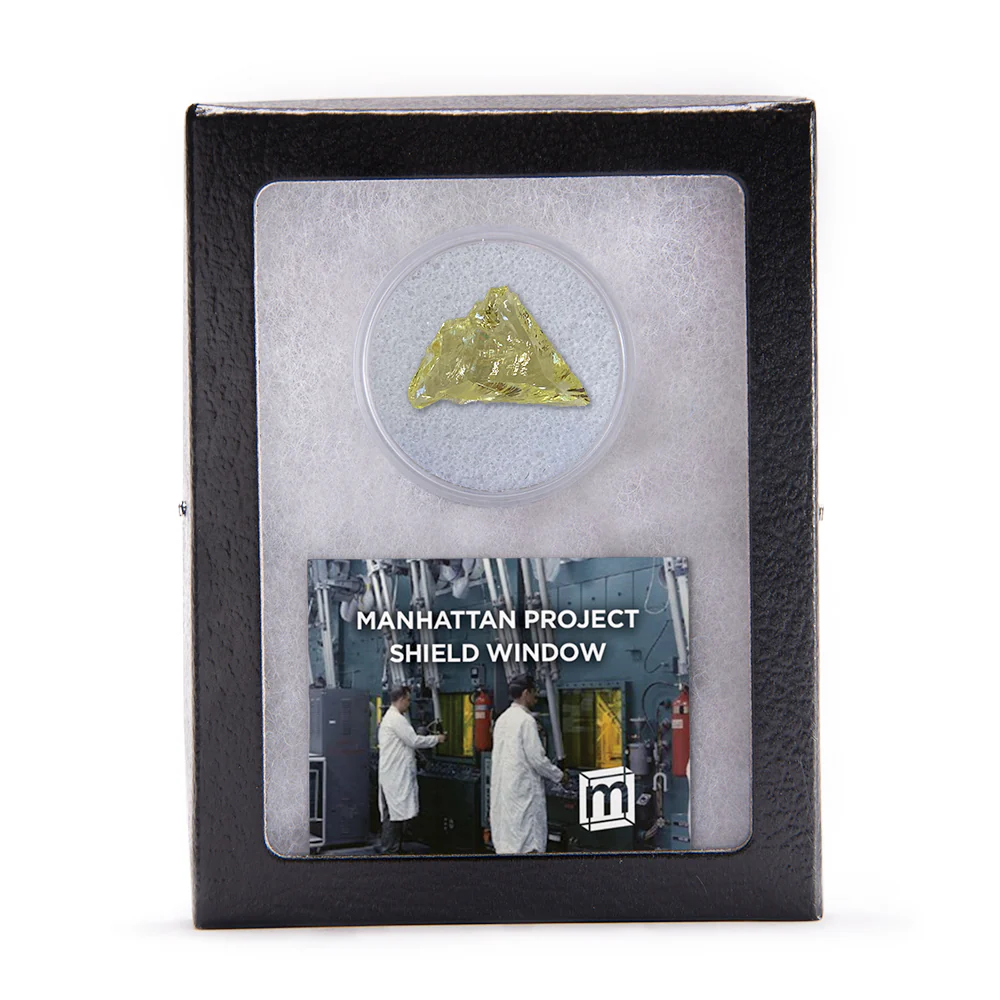
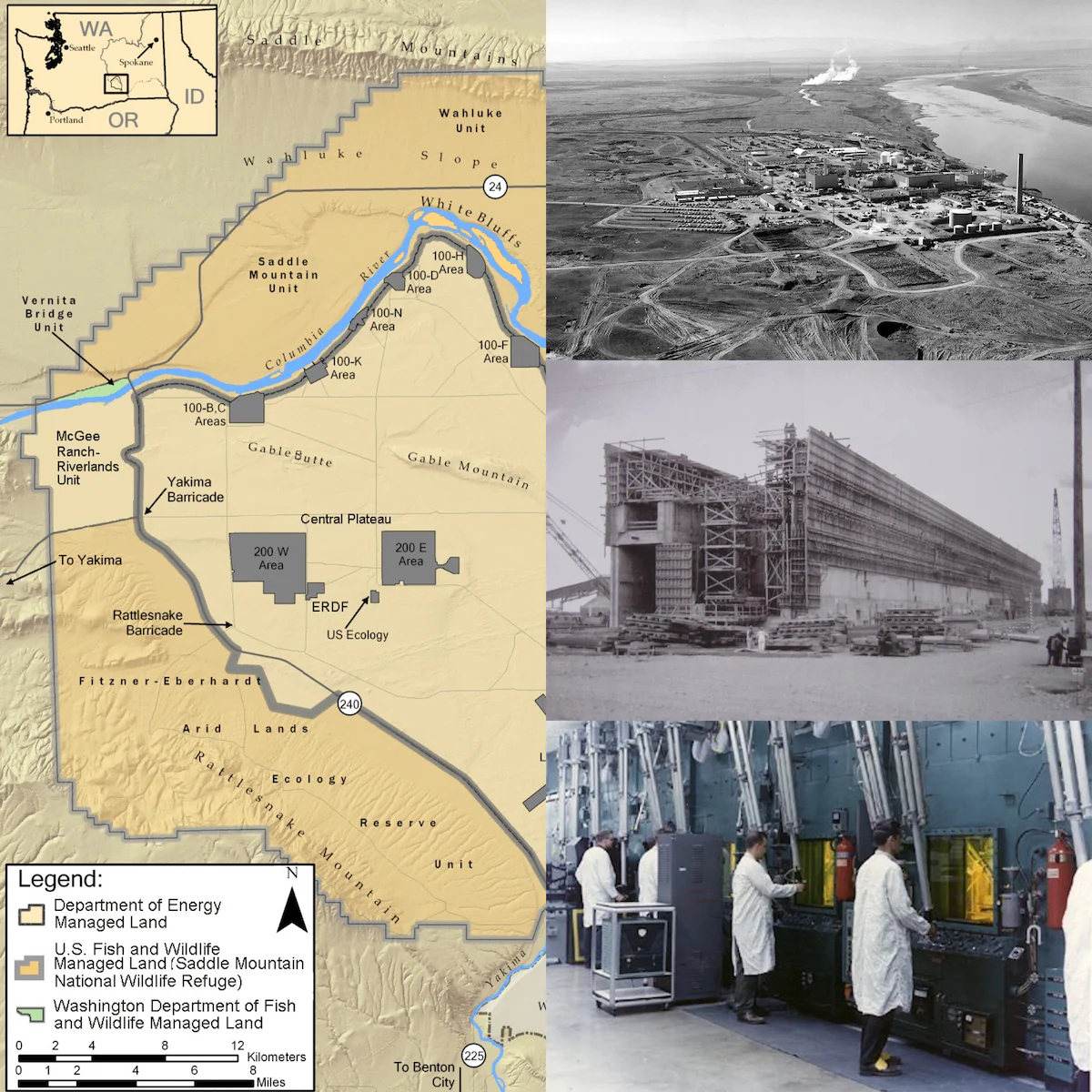
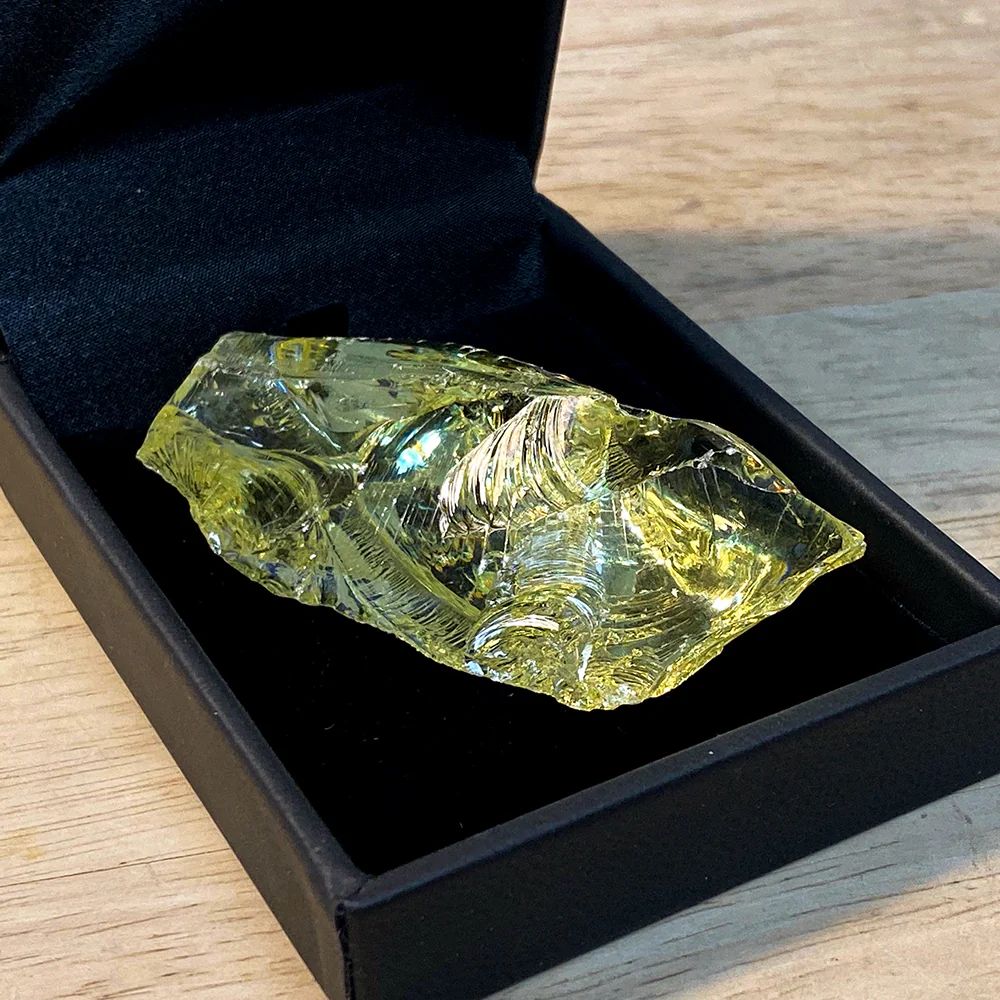
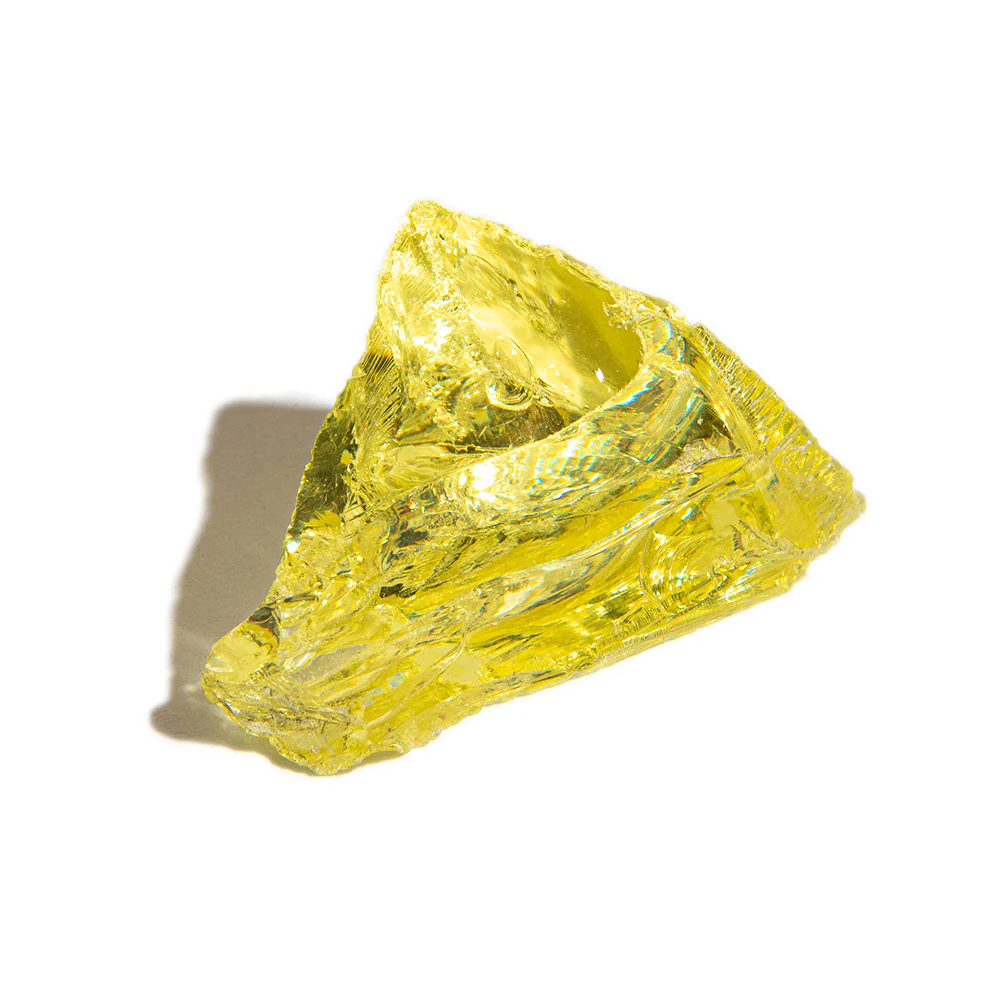
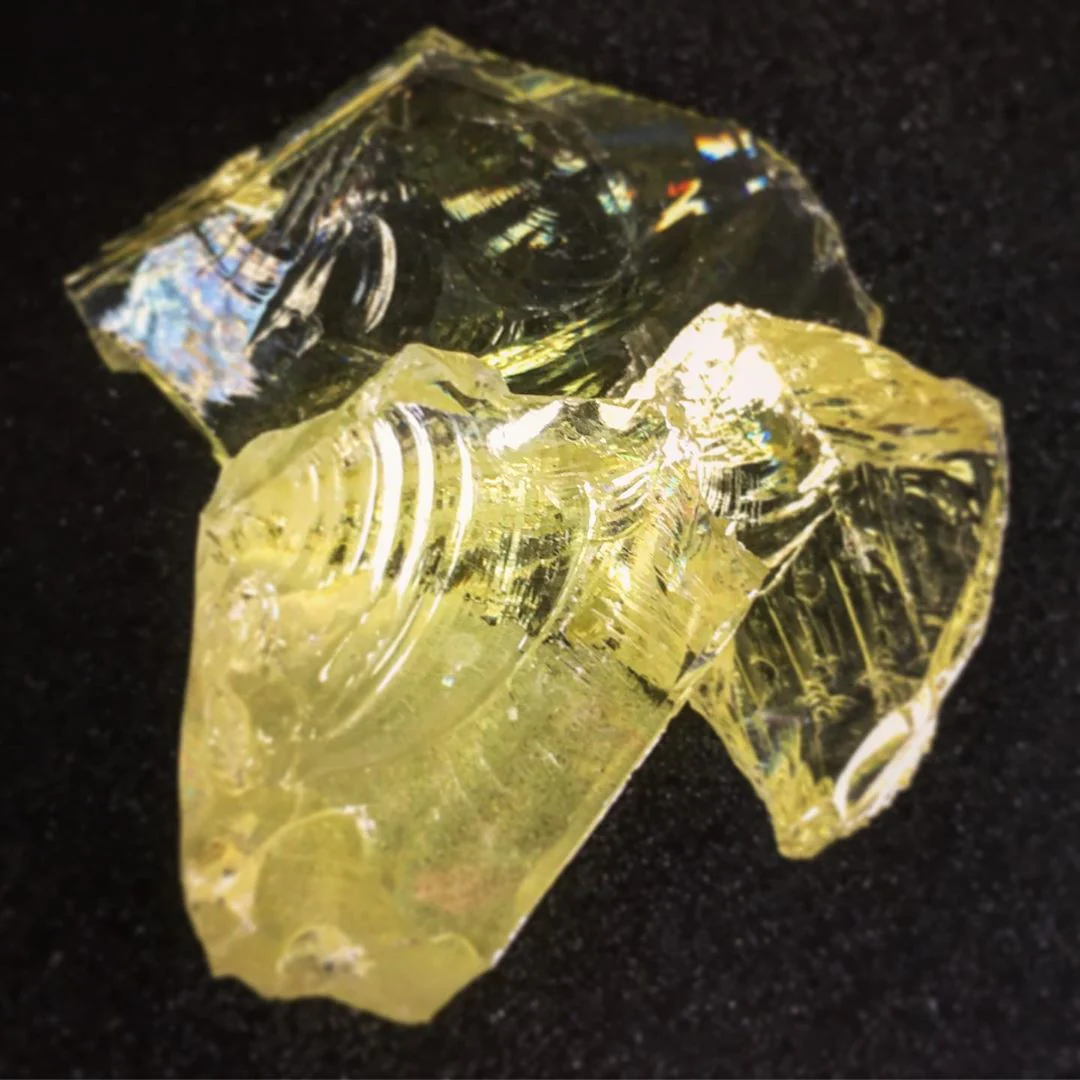
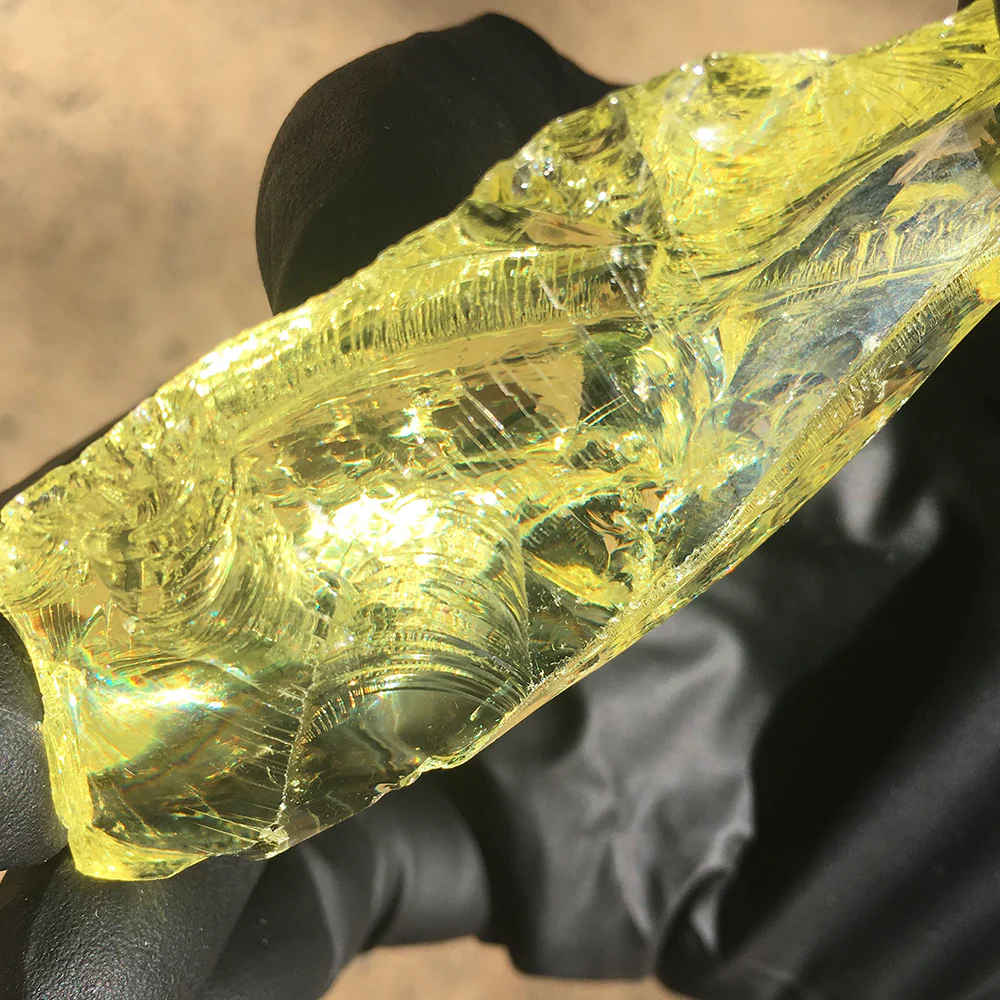
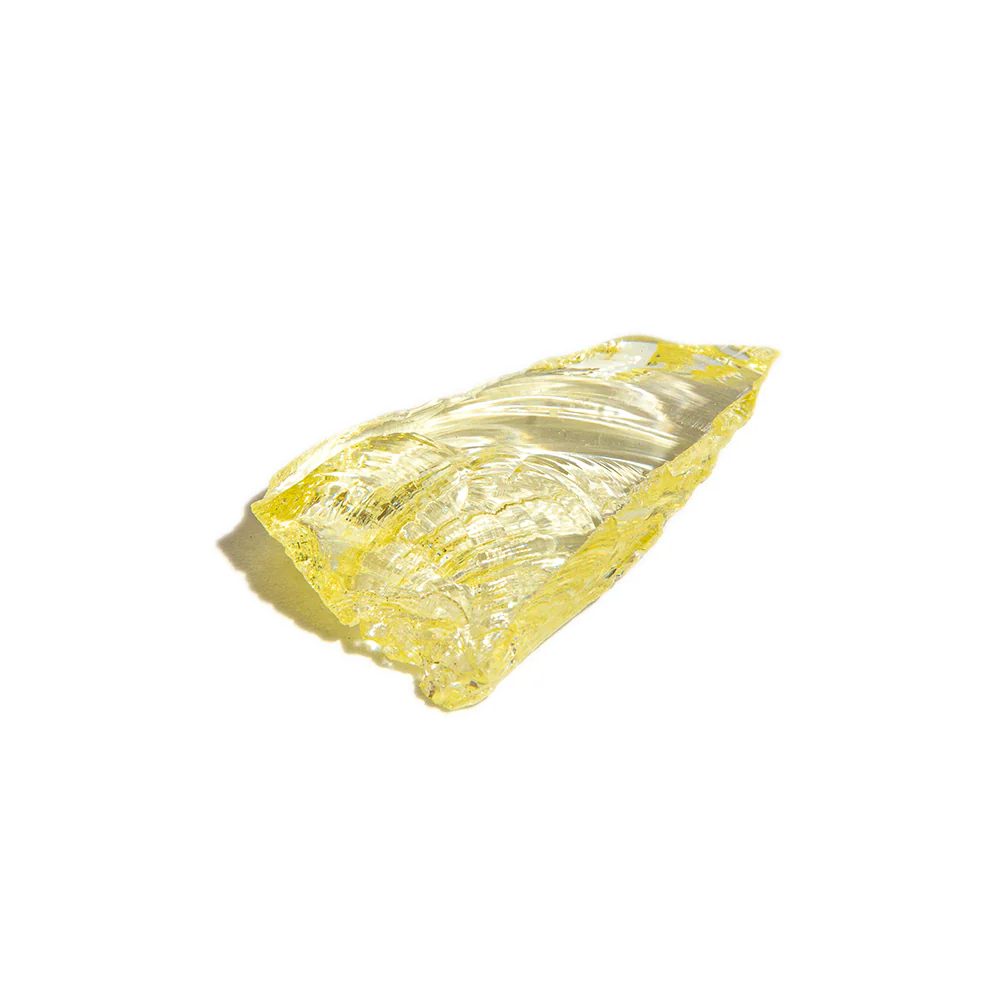
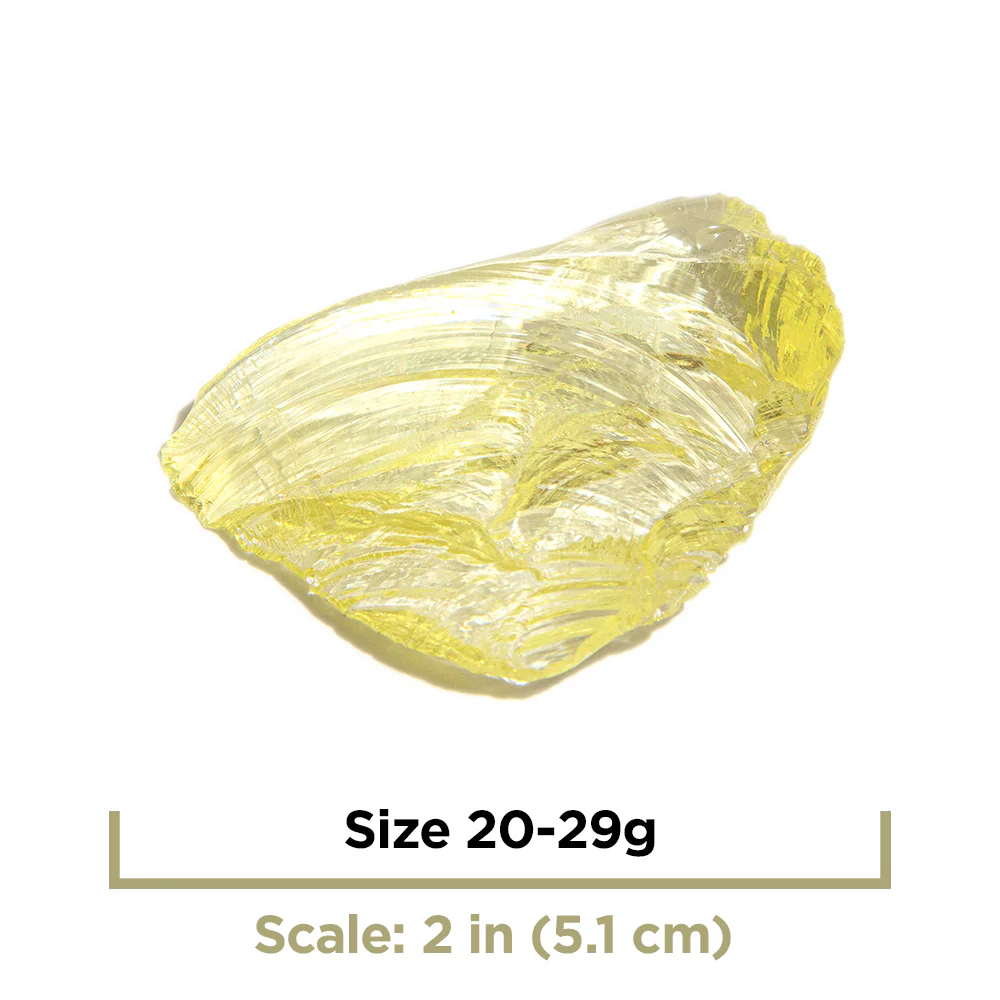
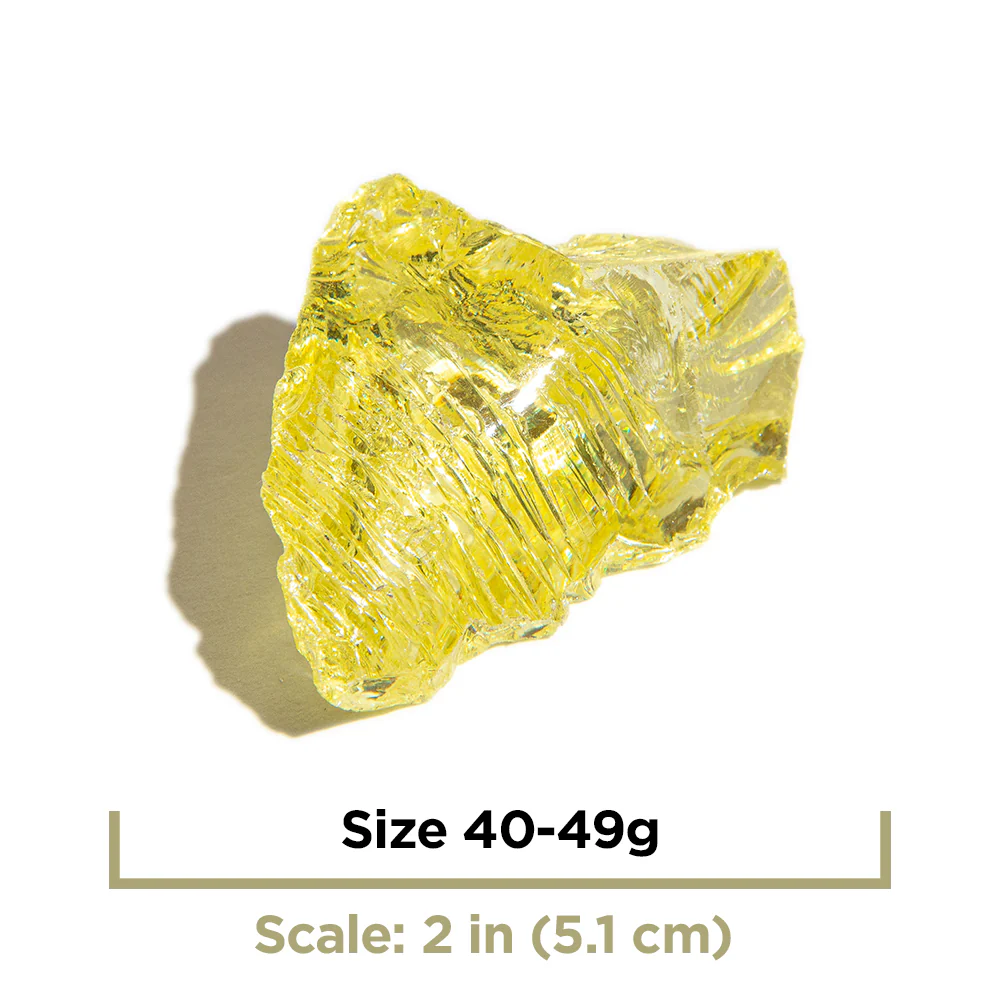
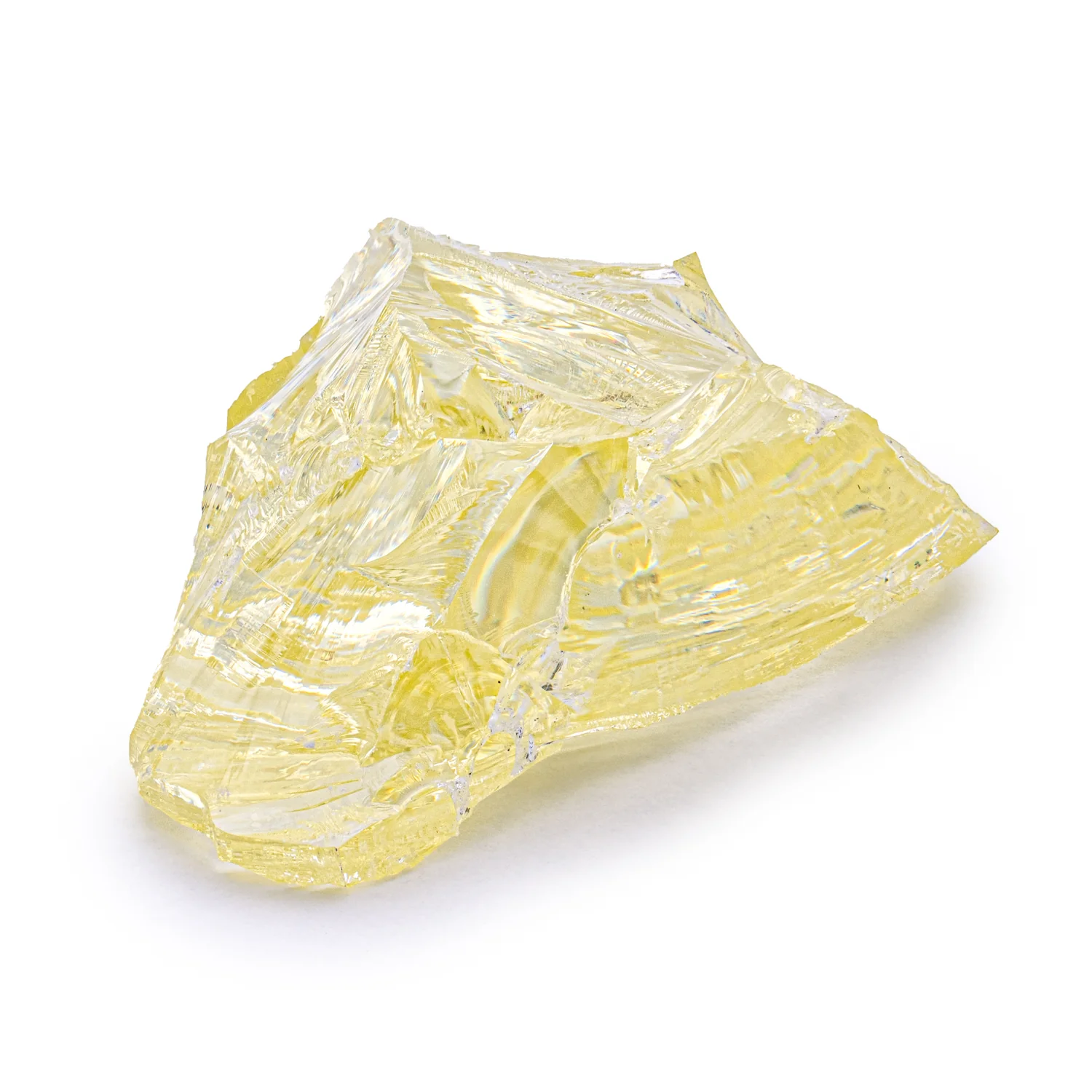
This specimen is a fragment of a leaded glass shield window installed in the T Plant (221-T) Plutonium Recovery Building, the first and largest of two production bismuth-phosphate chemical separations plants used to extract plutonium from fuel rods irradiated in the Hanford Site’s reactors. The Plutonium produced here was used in both the Trinity test on July 16, 1945 and in the "Fat Man" atomic bomb used over Nagasaki, Japan on August 9, 1945.
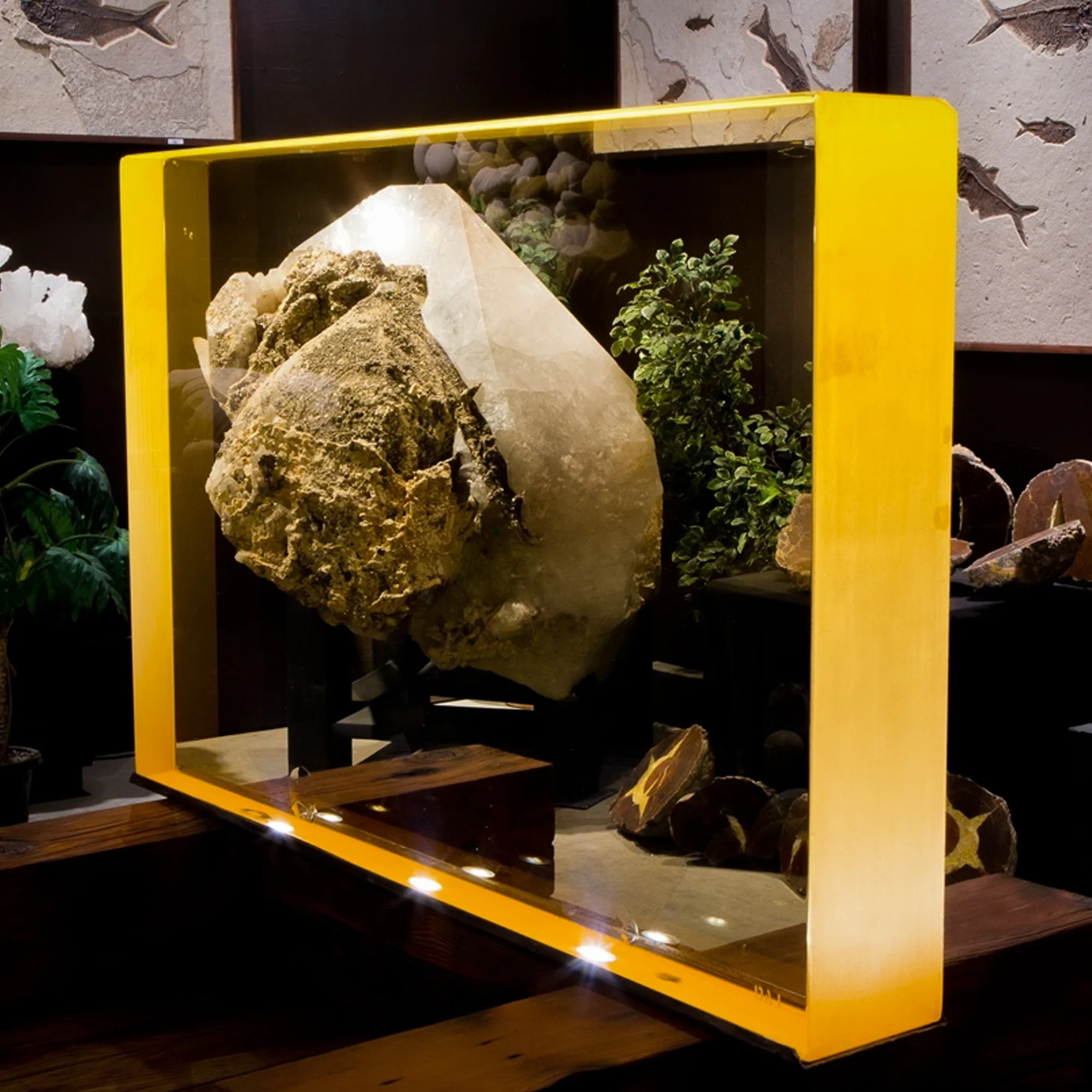
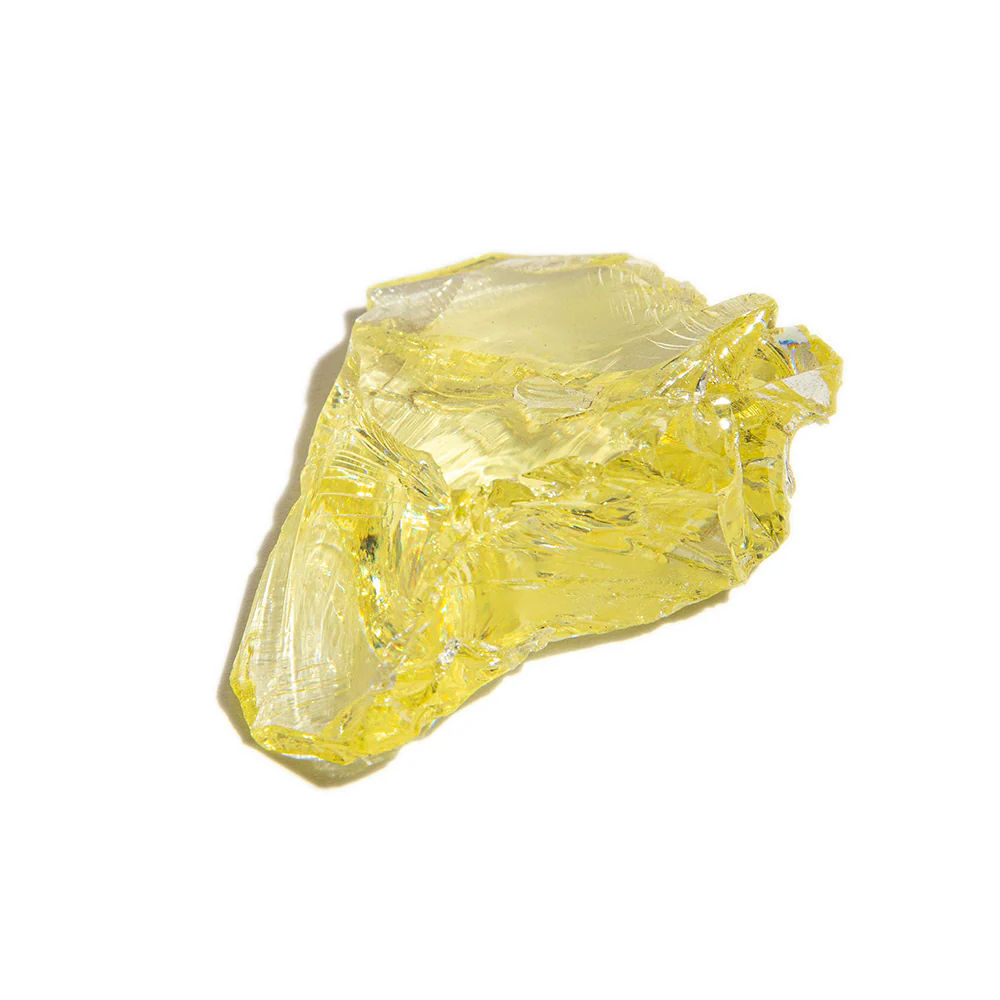
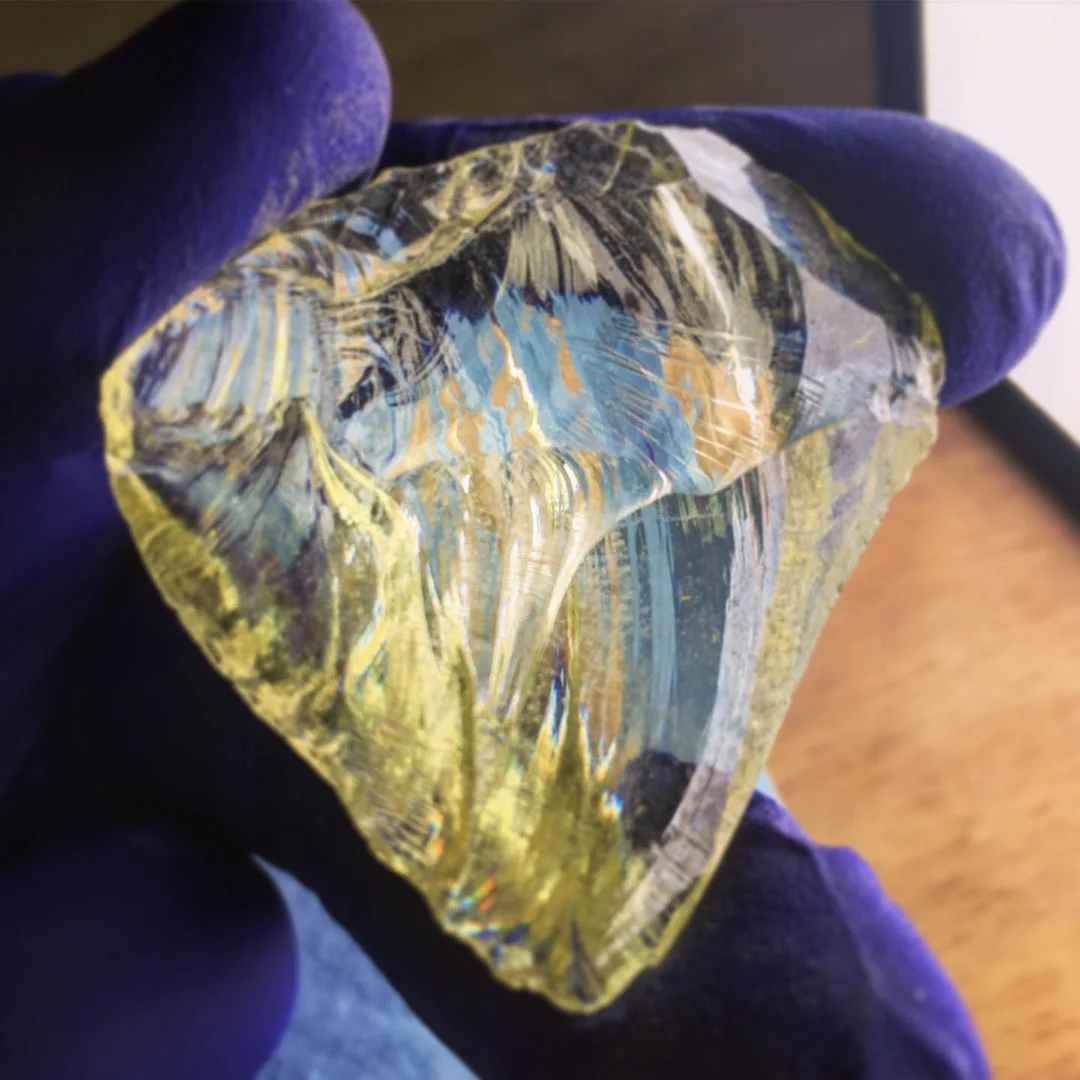
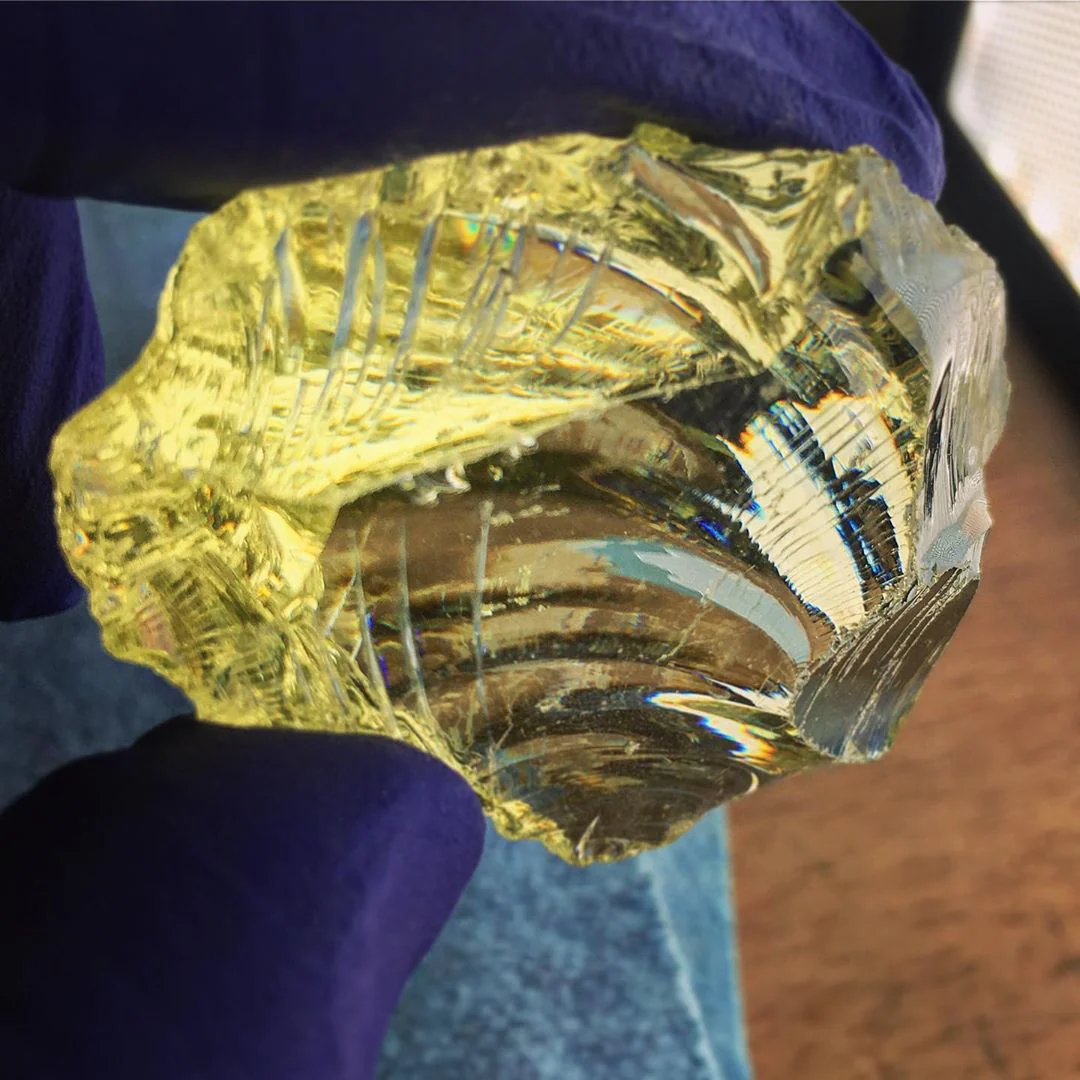
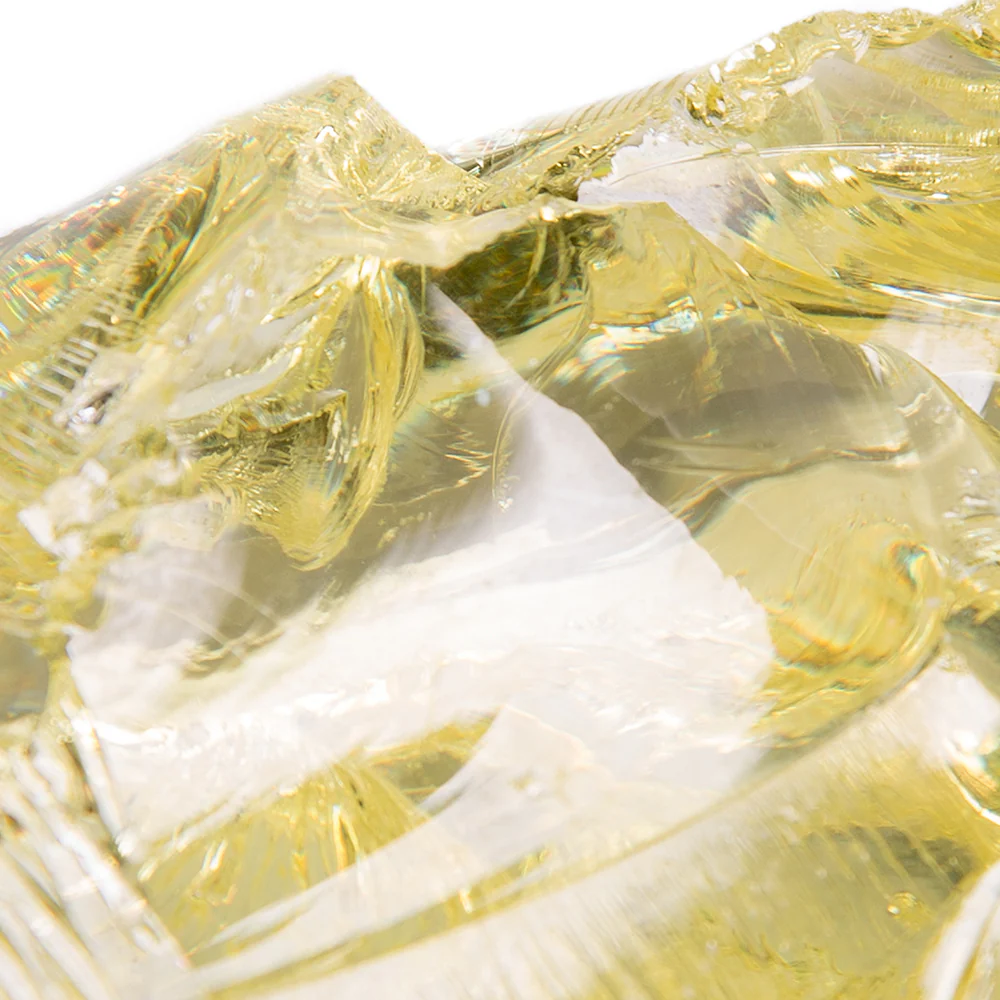
The glass was sold during a government surplus auction in the late 1980s as part of the long (and continuing) decommissioning process. The yellow color of the glass is due to a high concentration of lead-oxide (up to 70%), which blocks blue and near-UV spectral frequencies, and also gives the glass its protective qualities.


Description
The Manhattan Project was the codename for the research and development effort which allowed the United States to rapidly develop a series of atomic breakthroughs during World War II, including the first industrial-scale plutonium production reactor and the first atomic bombs. This enormous project involved over one hundred thousand scientists, engineers, technicians, and construction workers at more than 30 sites across the United States, including well-known locations such as Oak Ridge, Los Alamos, Trinity, and Hanford.
This specimen is a fragment of a leaded glass shield window installed in the T Plant (221-T) Plutonium Recovery Building, the first and largest of two production bismuth-phosphate chemical separations plants used to extract plutonium from fuel rods irradiated in the Hanford Site’s reactors. The Plutonium produced here was used in both the Trinity test on July 16, 1945 and in the "Fat Man" atomic bomb used over Nagasaki, Japan on August 9, 1945.
The glass was sold during a government surplus auction in the late 1980s as part of the long (and continuing) decommissioning process. The yellow color of the glass is due to a high concentration of lead-oxide (up to 70%), which blocks blue and near-UV spectral frequencies, and also gives the glass its protective qualities.