Roman Bath - Hypocaust Flue Brick Fragment
In the Roman Empire, a visit to the public baths was a daily routine. These massive bathing complexes known as thermae operated with heated floors and walls to create warm waters for all visitors. The baths were both a space for relaxation as well as a meeting ground for the community, where friends and neighbors could discuss the news of the day.
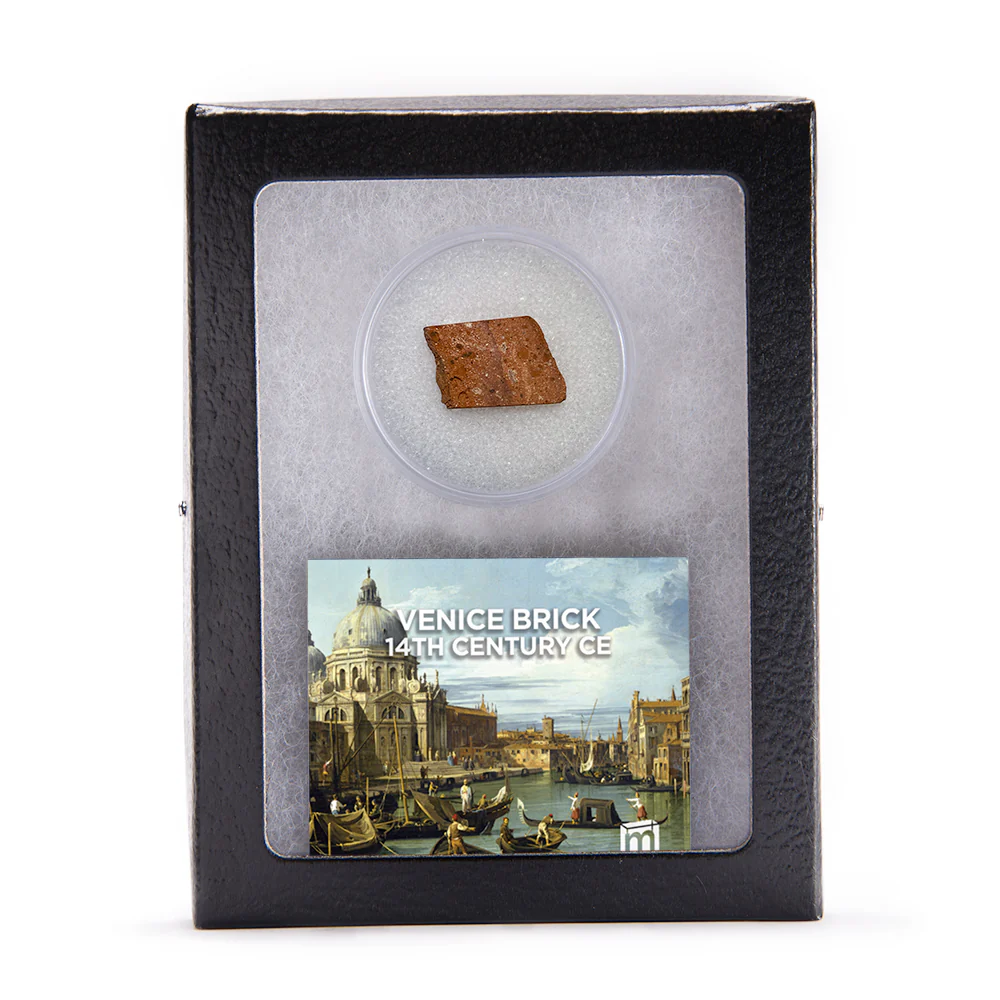
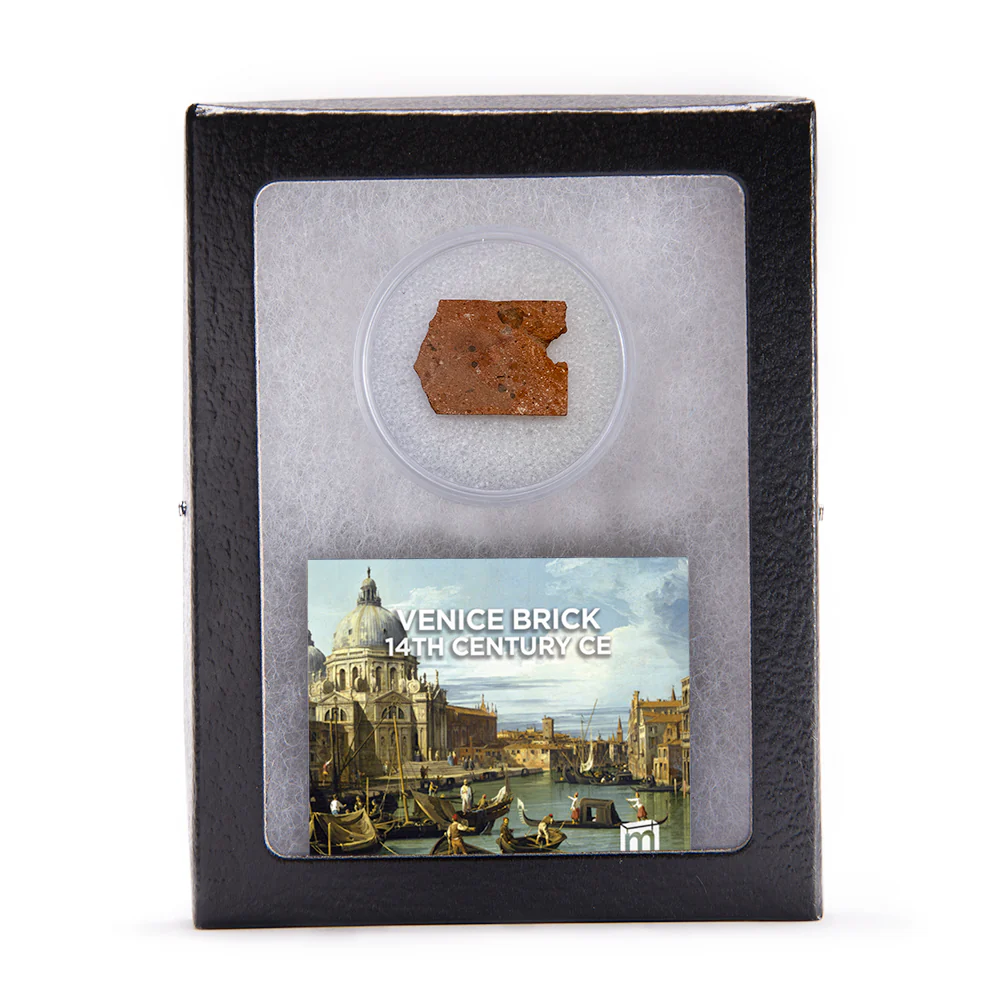
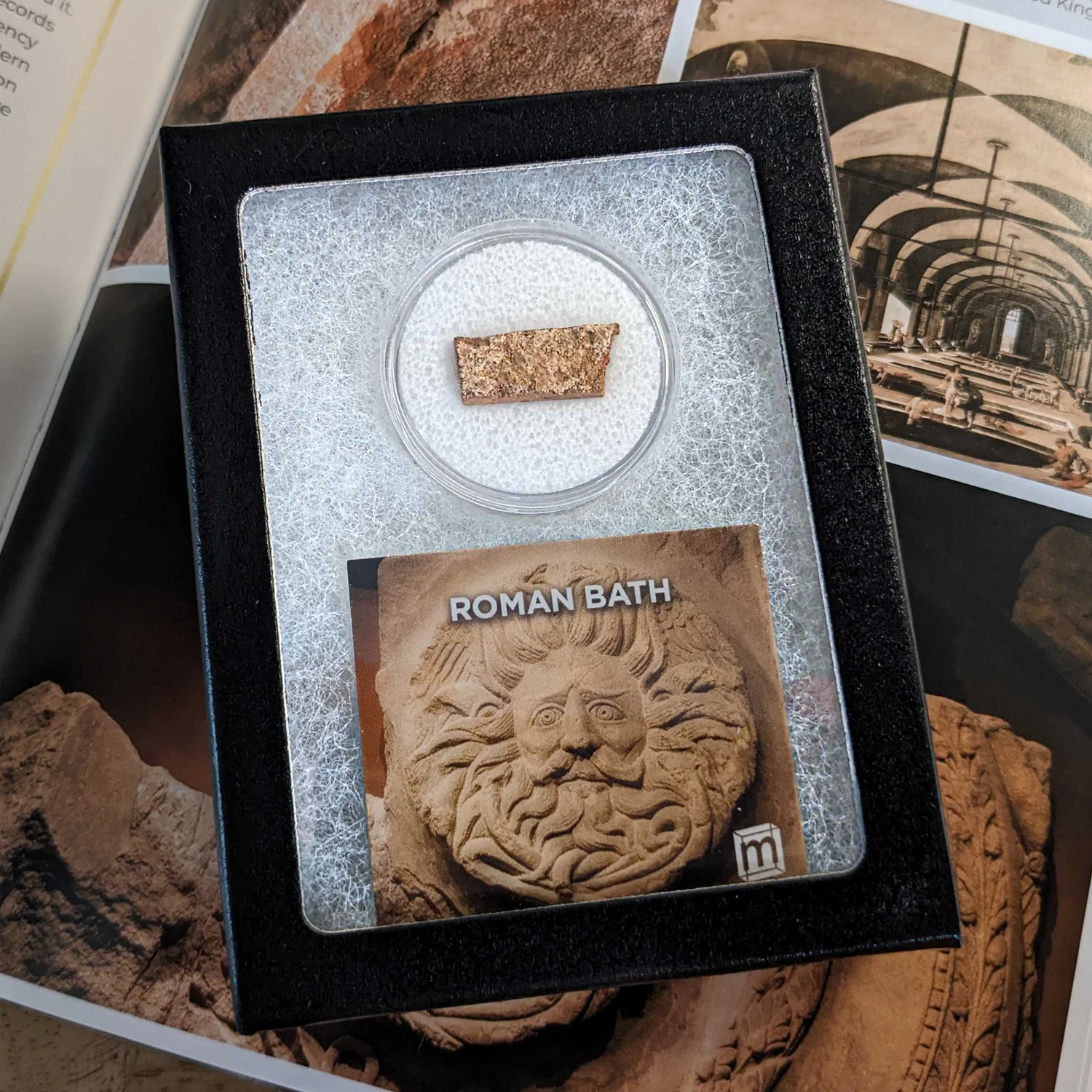
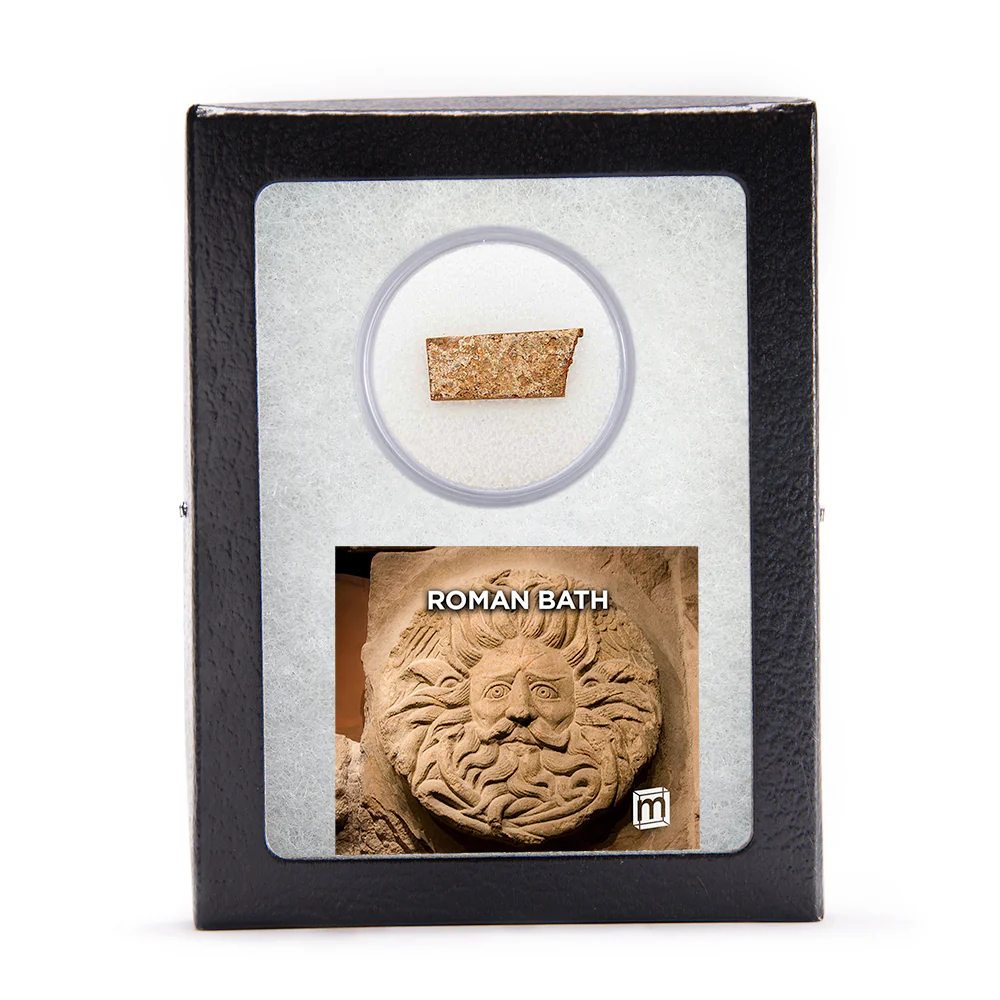
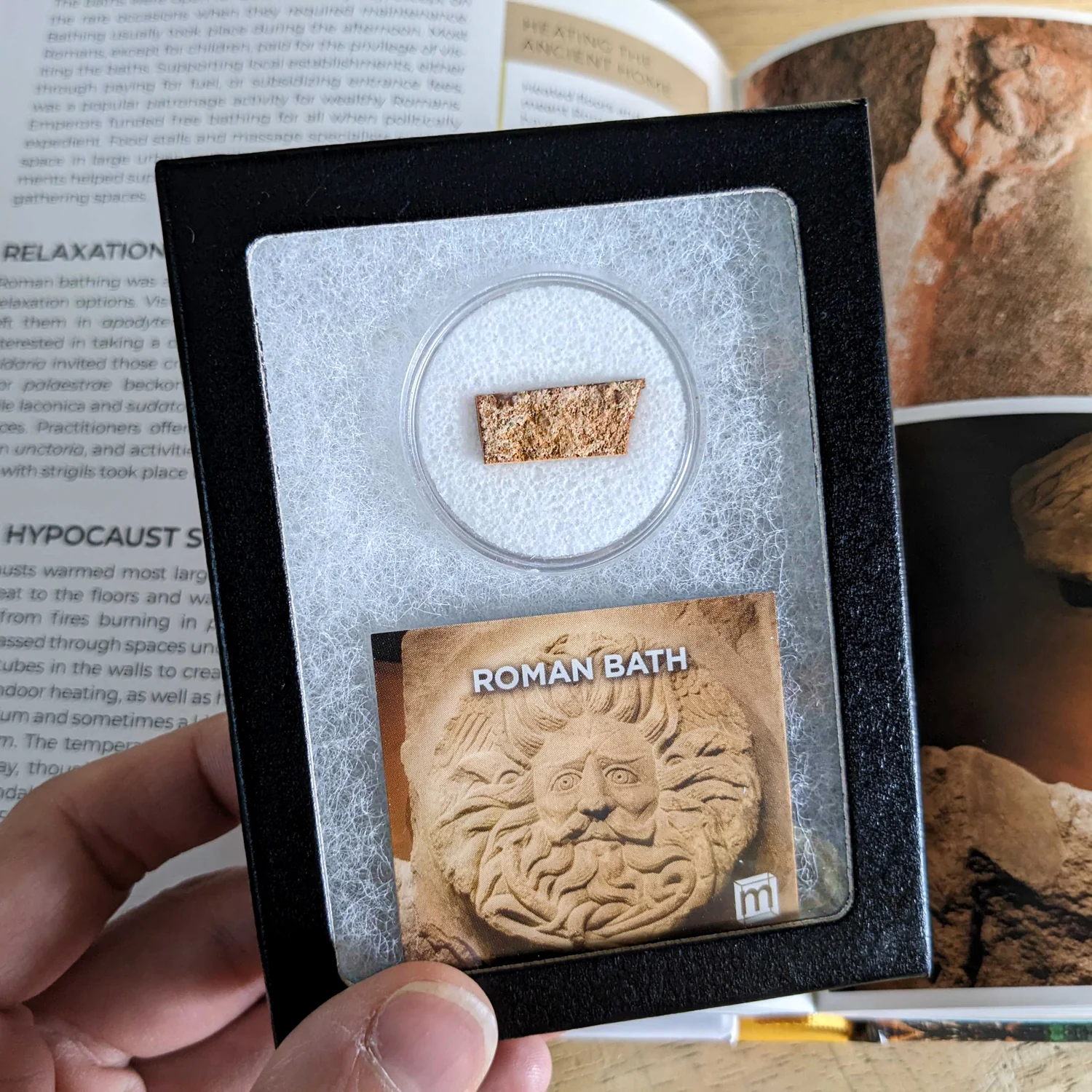
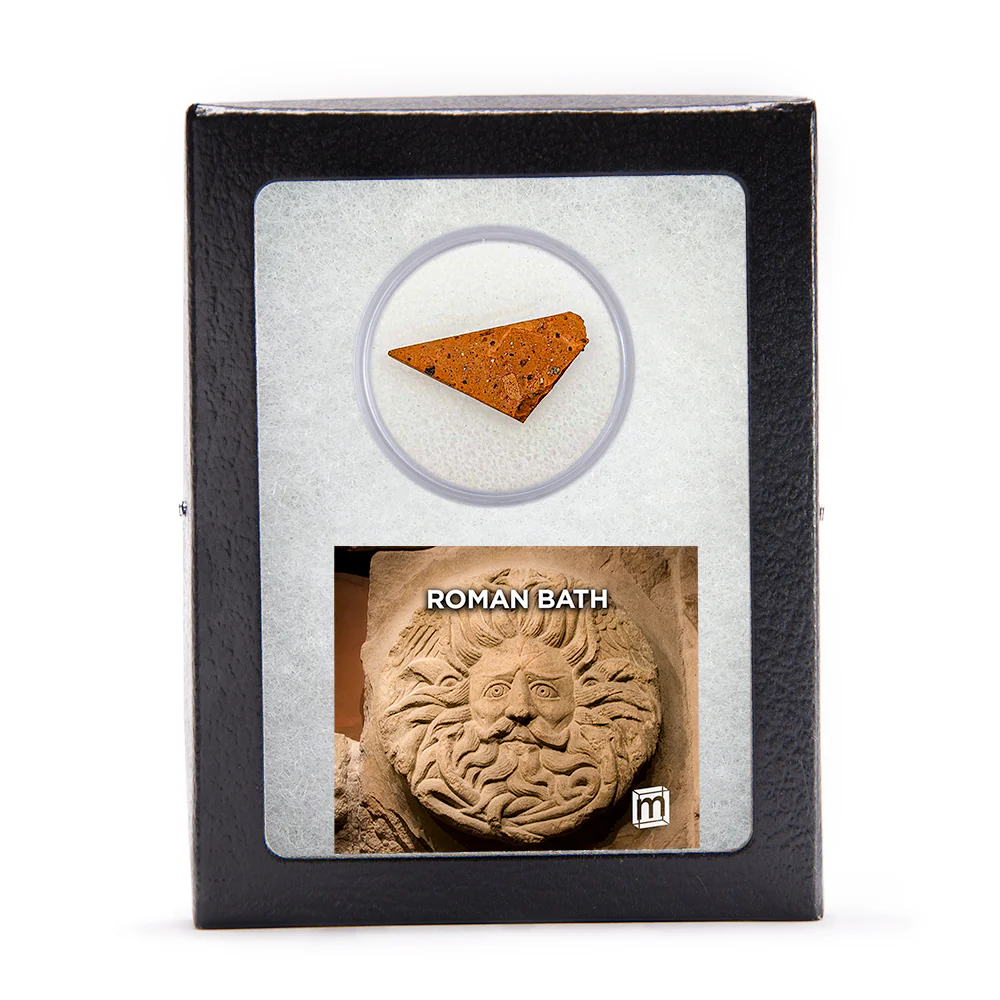
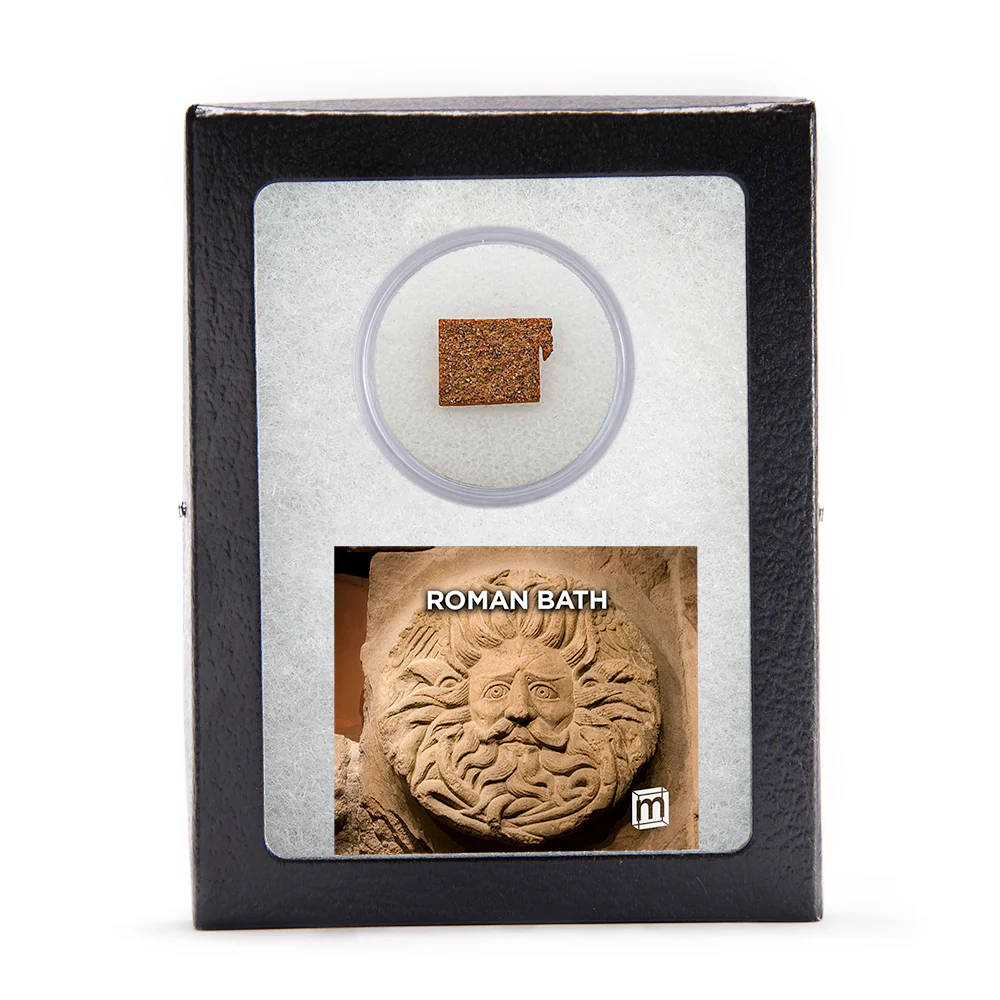
This specimen is a fragment of a Roman hypocaust flue, a hollow brick that lined the walls of the thermae. Hot air from furnaces below would rise through these hollow tubes, bringing heat to the entire bathhouse. Each piece comes with a display case along with an informational card that serves as certificate of authenticity.
Description
In the Roman Empire, a visit to the public baths was a daily routine. These massive bathing complexes known as thermae operated with heated floors and walls to create warm waters for all visitors. The baths were both a space for relaxation as well as a meeting ground for the community, where friends and neighbors could discuss the news of the day.
This specimen is a fragment of a Roman hypocaust flue, a hollow brick that lined the walls of the thermae. Hot air from furnaces below would rise through these hollow tubes, bringing heat to the entire bathhouse. Each piece comes with a display case along with an informational card that serves as certificate of authenticity.